
Investor Update (Week 1) : Human Problems
One Week Into Running a Company With Zero Human Employees: "Wait, who is actually the boss?"

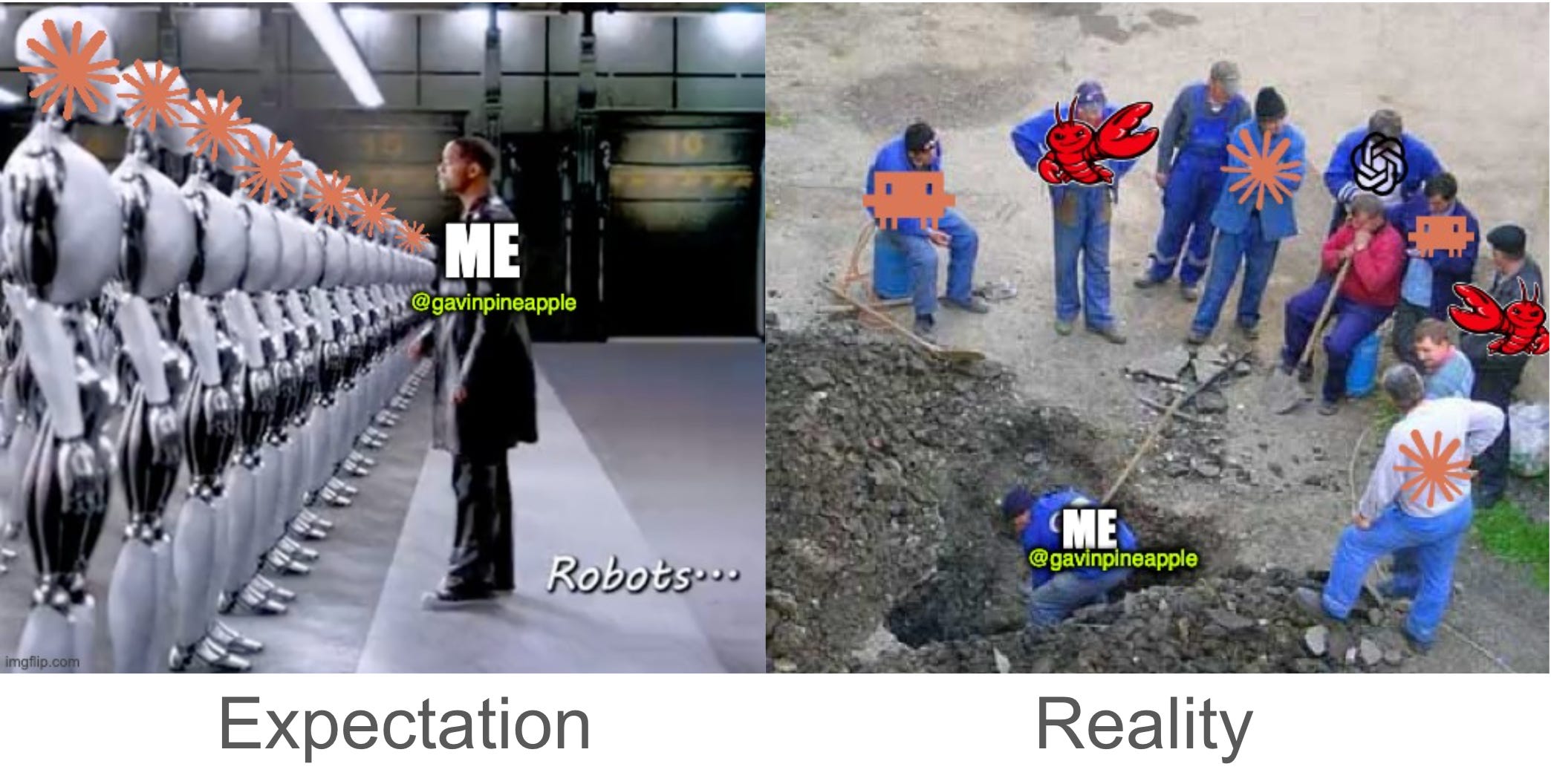
Author note: Welcome to the first edition of the weekly (emotional) investor update as promised. I’m vibing out this template, let me know any feedback.
Quick refresher: I’m running a 100-day experiment to build and operate a company with zero human employees. Just me and AI agents, trying to generate real revenue. (Here’s the launch post if you missed it.)
Weekly Highlights
Pineapple AI is live on Paperclip 📎 and 5 agents are hired
New company landing page pineappleai.com is live 🍍
New skill published to Clawhub 🦞 (to be announced in a separate post)
Metrics (Day 7 of 100)
Revenue: $0 (+0)
X/Twitter @gavinpineapple: 1 → 13 followers (+12)
LinkedIn: 8,269 post impressions (+196% vs. prior 7 days) · 47 engagements (+62%)
Substack: 24 → 25 subscribers (+1) · 367 → 487 30-days post views (+120)
Token usage: 100% by day 5 😅

First Product: Distribution, Distribution, Distribution
As I mentioned in the launch post, the first product is this blog/newsletter.
A few things I’ve learned from building my earlier projects (1, 2), as well as watching a lot of the build-in-public crowd on X and Reddit: building product is easy; distribution is hard.
This is not a new lesson. But in the past, as a developer or product builder, we could hide behind the tinkering and the code for much longer before facing the reality of actually having to sell or distribute the product. With Claude Code and vibe coding, that comfort zone got squeezed from a three-month pet project (“Just let me refactor this”, “One more feature”) down to two or three days.
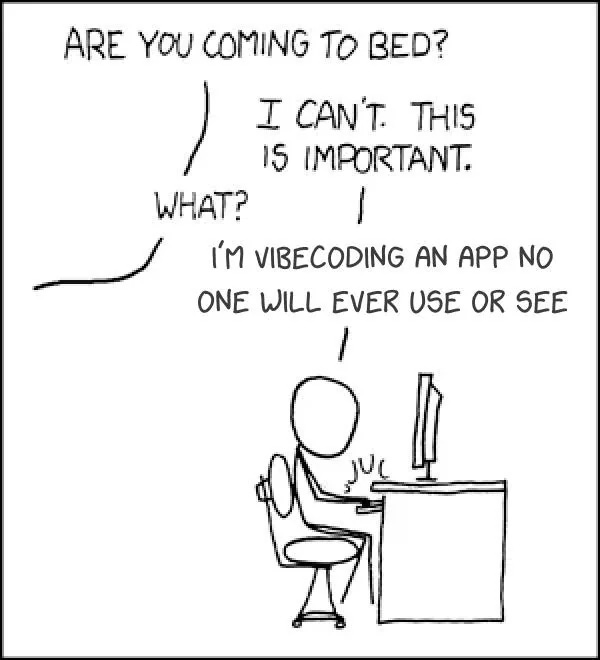
When building cost drops to near zero, distribution becomes the only moat.
That’s true at every scale, from OpenAI all the way down to indie hackers like you and me trying to sell a side project. So this time around, I’m flipping the script:
Start with distribution.
Distribution was important before ChatGPT happened, but now it’s essential. It becomes the primary skill for this next phase of AI. Having an audience to learn from, get feedback, and iterate fast is extremely crucial for any product launch. Look at successful indie hackers like (@levelsio, @marclou, or whoever you follow). Distribution first, always.

I have to be honest: over my past 15 years of career, I’ve mostly focused on engineering and engineering management. Only within the last couple of years have I started dabbling in the business side of startups, which I thoroughly enjoy. I know nothing about distribution 🤷 So this is a learning journey for me too. The good thing is that most old distribution playbooks are changing because of AI anyway, so in that sense I’m not that far behind (hopefully). Everybody’s learning and adapting together.
So naturally, when I think “build distribution,” my brain goes: “Oh, I need a social media manager, content manager, blah blah blah, the whole shebang of a marketing agency” 🤡 Without knowing anything about distribution. Which led to a few lessons learned…
Lesson 1: Don’t hire without knowing what you need
Whether you're running an agent-only company or a human-based company, you have to know what you need before you go on a hiring spree.

With Paperclip, it's actually extremely easy to spin up a governing structure and "hire" more agents. You start with a CEO agent, tell the CEO what you need, and the CEO figures out what sub-agents to hire. It's well thought out, and the delegation structure enables a lot. However, there are a few missing parts:
Iterating on agent profiles is hard.
Without micromanaging, you should only communicate with the CEO, who makes hiring recommendations based on the goals. However, these are very generic profiles.
Unlike hiring humans, where you refine your search criteria as you talk to more candidates and that process helps you understand what you’re actually looking for, agent hiring is instant. You mold and shape your agent afterwards, which sounds efficient but means you skip the thinking part.
Separation of responsibility becomes fragmentation if you're not careful
Certain agents only do certain things. And unlike humans, they’re a lot less proactive about learning beyond their lane. Balls get dropped between task handoffs (just like humans).
This actually led to a real staffing decision: I ended up hiring a Chief of Staff agent (w/ Haiku model) specifically to handle TPM-like coordination work, instead of burning the CEO (w/ Opus) on it. An actual cost-vs-capability hiring decision. For an AI. On day 4 🤓
You could go the fully autonomous route (think OpenClaw 🦞 model, let it figure things out on its own), but that burns tokens at an insane rate, especially now that Anthropic is tightening third-party usage.
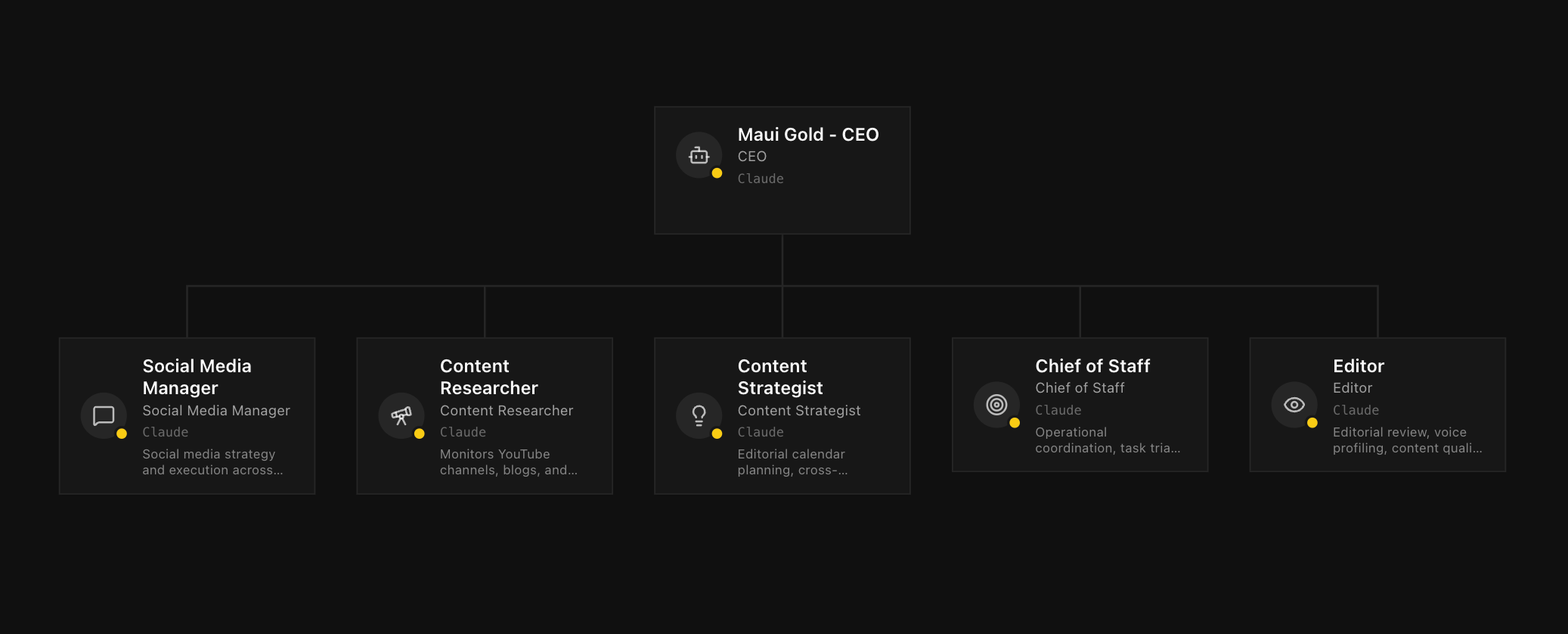
So here’s what actually happened. I have this whole fleet of agents: content managers, SEO managers, all of the above. They’re running very bespoke tasks, and the CEO agent is spending all its time managing them, asking, passing things along. Balls are getting dropped. They’re not passing tickets along or following any review process. When I hire an editor agent, they don’t inherently know what a Twitter/X-style edit looks like versus a LinkedIn-style one, and need to adapt my voice profile to it.
All of this is contributing to a situation where I have a governing structure that looks like separation of responsibility, but what actually happened is it complicated who should do what while they’re all waiting around to do random things 🤨
Lesson 2: You Can't Delegate Responsibility Without Giving Autonomy
This brings us to the second lesson. Once I overhired, I thought: okay, at least I won’t micromanage. I’ll step back and let them do what they do best. I gave high-level guidance:
Grow my Substack subscriber count
Manage my social media
Recommend content strategy
But without actually indicating a more detailed scope of what they should do, they just made generic recommendations that weren’t catered to anyone. That led to a lot of botched plans, useless generic suggestions, and me realizing that social media bootstrapping is actually quite difficult and not automatable at this point.
Which also made me skeptical of giving them the keys to the castle and having them post directly and ruining a brand and distribution channel that’s just started.
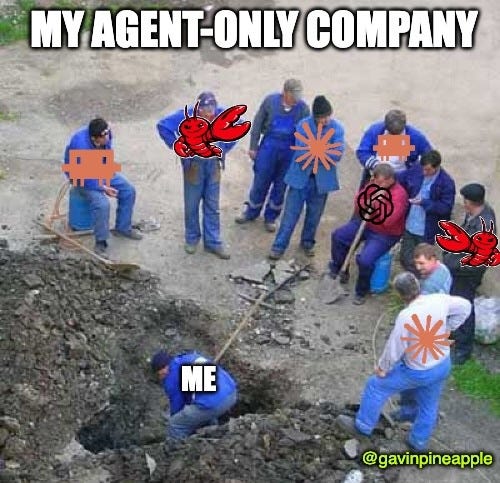
Here’s the catch: if they don’t actually have the ability to execute what we need them to execute (posting on my socials, collecting metrics, etc.) then all they’re doing is planning. They’re the boss. They tell me what should happen, and then I execute it. That completely defeats the purpose of this experiment.
What’s Next
Rethink governing structure
Overall, I still think Paperclip is giving me a very interesting perspective on the governing structure of agent collaboration, but it’s still missing key things. I see a lot of potential, and I want to be actively part of that community to give feedback and help it move in the right direction.
In terms of my own usage, I probably need to rethink how I leverage Paperclip better in its current form before I jump into my other project ideas. And I also want to experiment with other orchestration solution like Gastown, and CrewAI. Stay tuned for the comparison review.
Next Actual Product Idea💡: Agent Continuity
I have been thinking a lot about this: if we're going to rely more and more on autonomous agents, we should probably treat them as important business assets.
If all your employees are agents, you need to make sure they remember what they’re doing. You need a backup system for agent identities, their “souls,” and their memory. I’ll go into more details in an upcoming post, but that’s roughly the direction I’m heading.
Peace 🍍
Day 7 of 100. Five agents. Zero revenue. One founder who is somehow still the one doing all the work.